Drilling Pilot Holes on the back of a Pinball Playfield

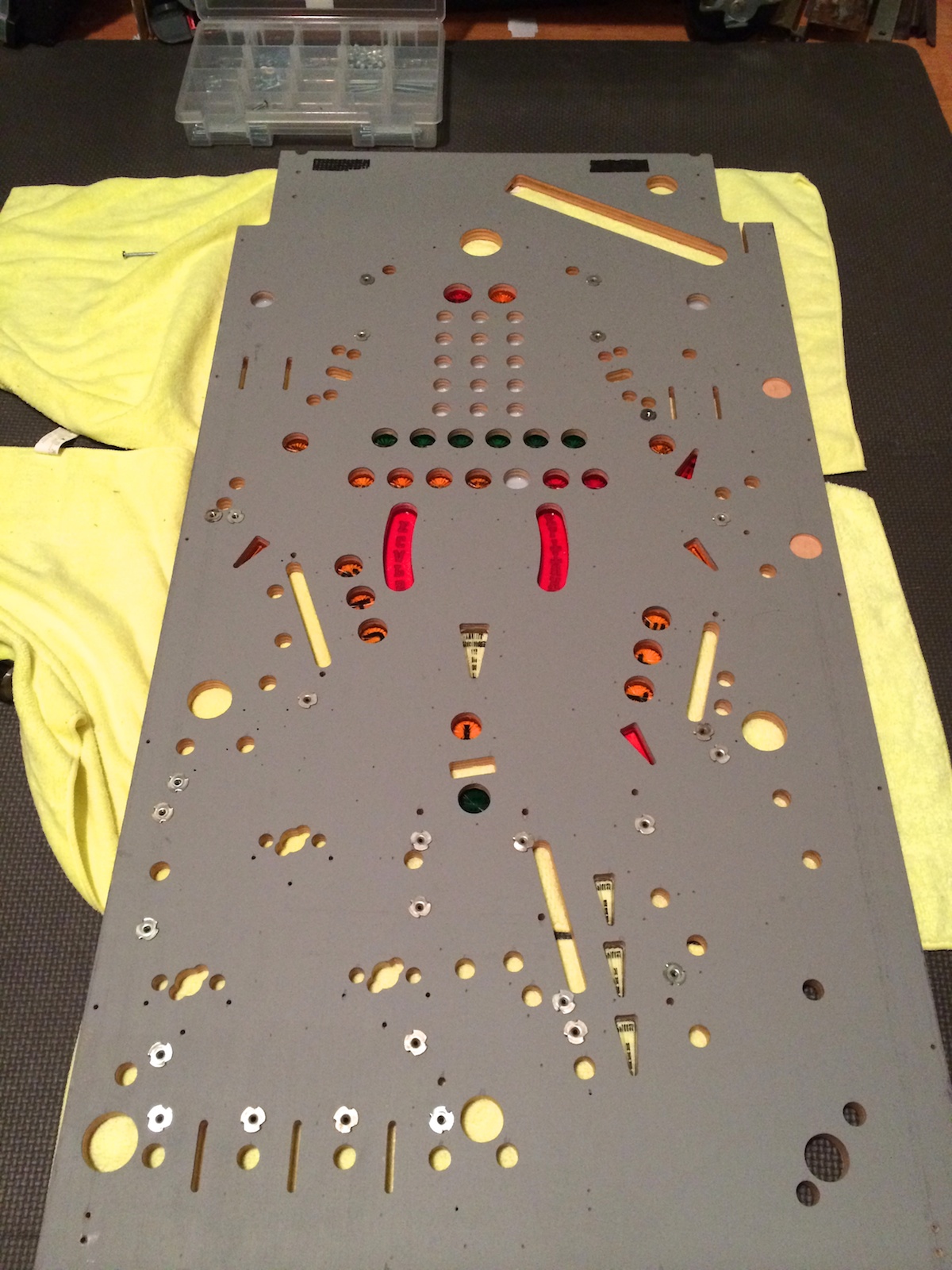
I’ve started drilling pilot holes on the back of my Space Shuttle Pinball reproduction playfield. Great care must be taken on this task, as drilling these holes too deep can be disastrous – the drill bit could poke out on the artwork side, which would leave a permanent and unsightly hole where there shouldn’t be one.Β 

The playfield is about a half-inch thick (17/32″ according to Classic Playfield Reproductions). I’ve decided to drill my pilot holes to 3/8″. One could use drill stops which attach to regular drill bits, but you’d still have to be a bit careful when drilling… It turns out that I already had a tool that can do the job better – a microstop countersink cage. Rather than just type it out, here’s a video showing what it is and how it works.

They aren’t cheap, but I got mine used in an Ebay auction and it wasn’t too bad. If you decide to try this, keep in mind you’ll need the right length drill bit as the depth adjustment on the microstops isn’t huge. I’m using a #40 threaded bit, since they are readily available in different lengths – these are the drill bits used in aviation for installing 3/32″ rivets, a very common rivet size in small aircraft. They happen to make a good pilot hole for a #6 wood screw πŸ™‚

Posted in Space Shuttle | Tagged , , , | Leave a comment

Installed T-Nuts on New Space Shuttle Pinball Playfield

Just a quick update today. It’s time to start installing hardware on the new playfield! I started with the T-nuts (aka tee nuts). I hammered in, so it seems logical to do this first with the playfield still blank. I could also use a machine screw from the top side to install them, but hammering them in from the bottom was much quicker.

TeeNuts

Posted in Space Shuttle | Tagged , , , , | Leave a comment

Modified New Space Shuttle Pinball Playfield for Repro Ramps

It was too cold and rainy to do spray painting today, so I switched back to my other parallel task, the playfield swap.

My goal with my Space Shuttle pinball game is for it to look as new as possible when it’s done. To do this, I’m throwing as many new parts at it as possible – all new plastics, playfield, ramp, etc.Β The new reproduction ramps that are being made are of much thicker plastic – this has the benefit of making for a much tougher ramp that is less likely to crack over time. The downside is that the ramp cannot be installed cleanly into a playfield, as the extra thickness of material causes a clearance problem. The problem and one solution is described pretty clearly in this Pinside thread.

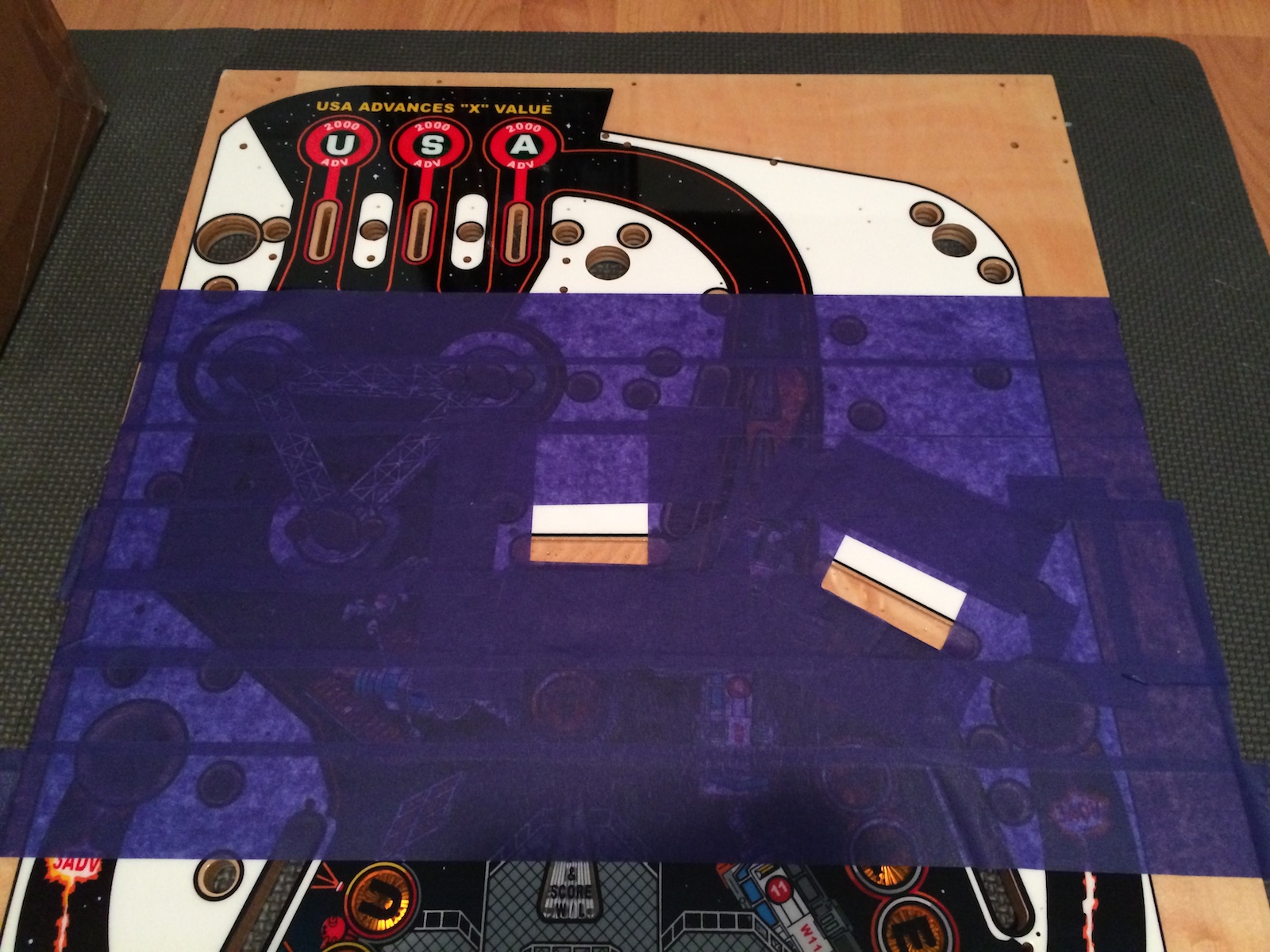
I decided to take the plunge and, while it sounds scary, route out my brand new expensive reproduction Space Shuttle playfield! Here it is with some painters tape to protect the clearcoat and mark out the material that needs to be removed:

RoutedPlayfield-1

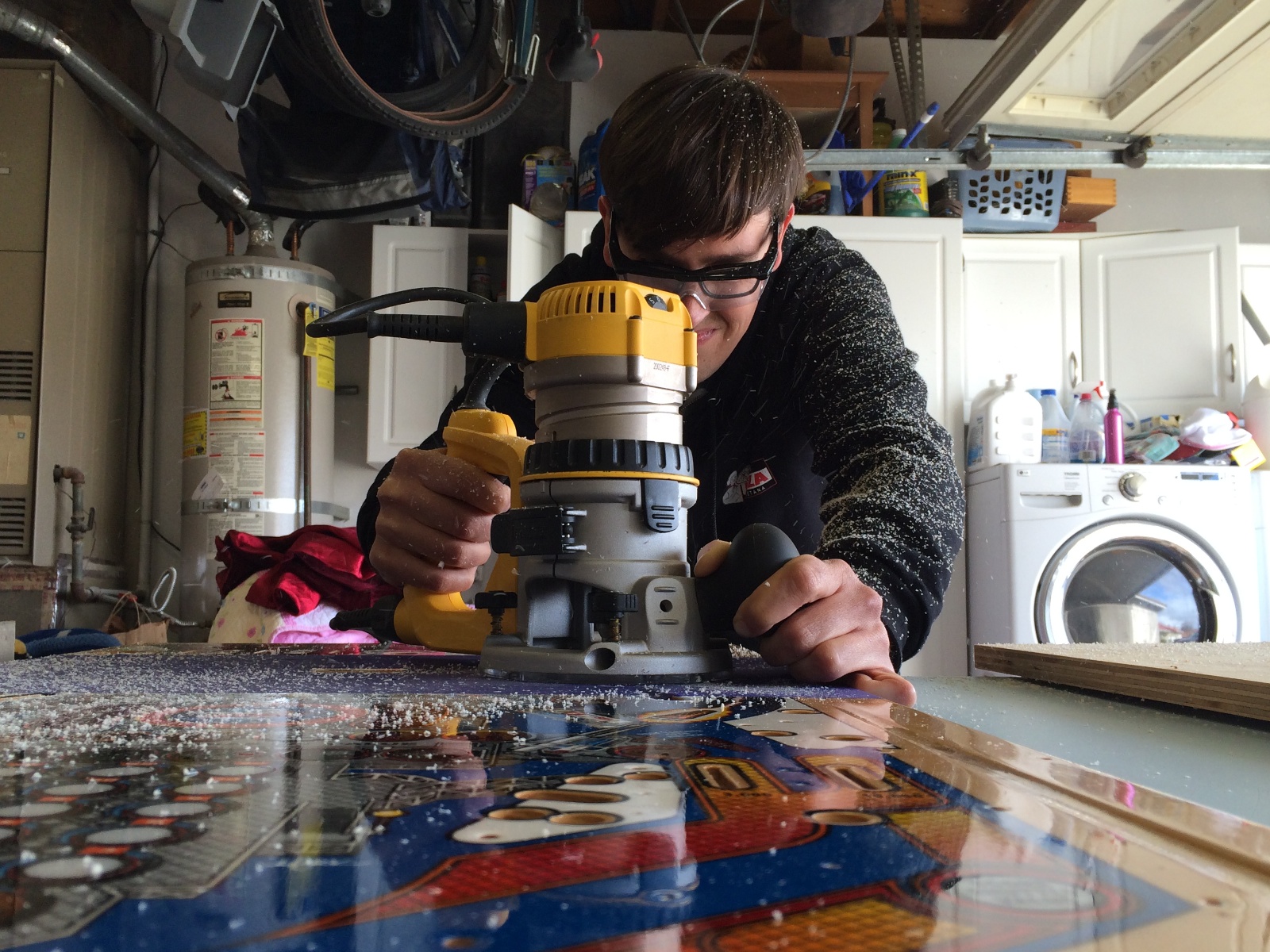
Next, I went to a friend’s house who was kind enough to not only let me use his wood router, but also teach me how to use it and practice on a scrap piece. Let the chips fly!

RoutedPlayfield-2

Here’s the result. I was easily able to stay within a 1/16″ of my taped edge going freehand, which is plenty enough precision for this.

RoutedPlayfield-3

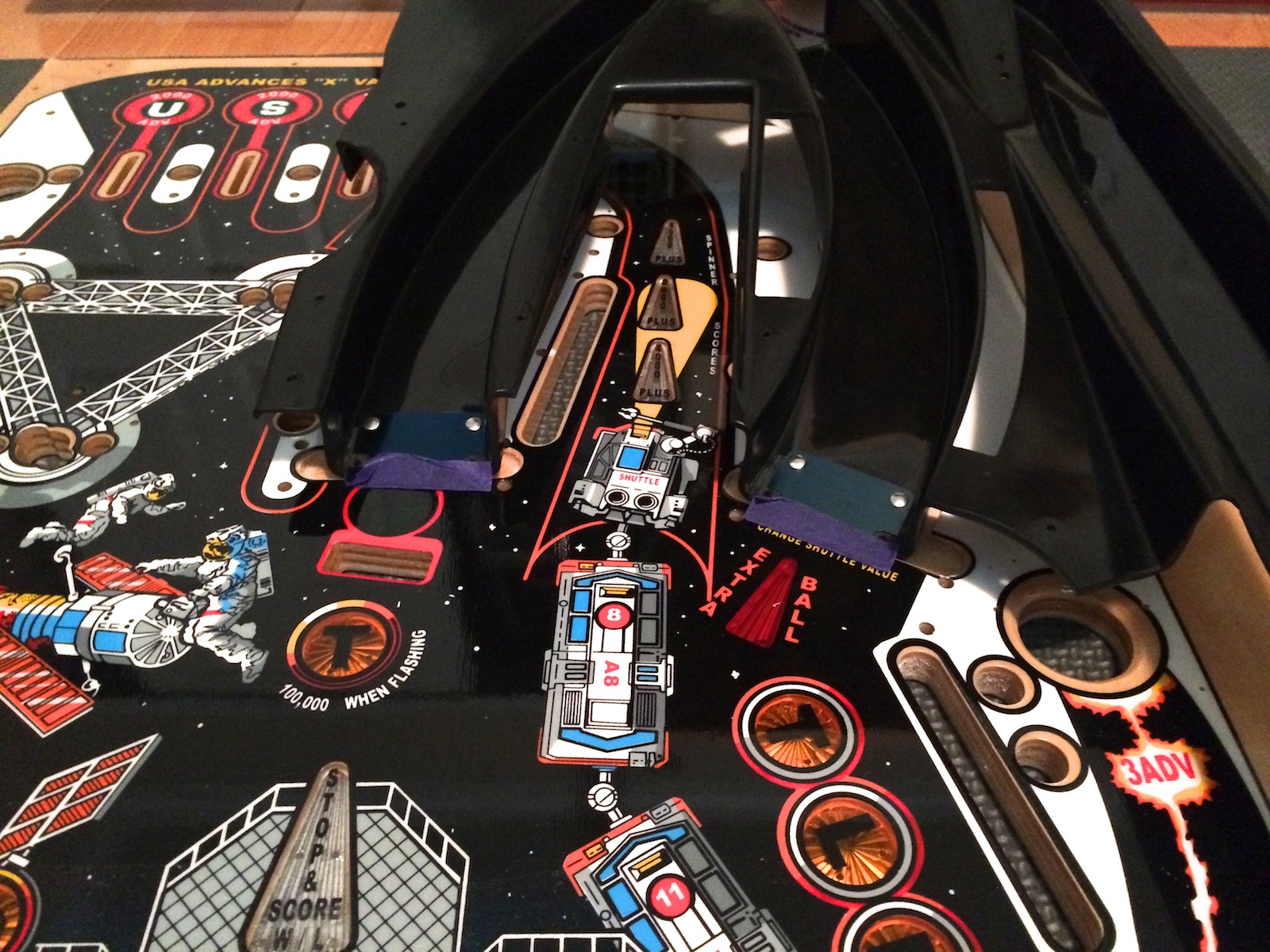
Now the ramp should install cleanly. I won’t know for sure until all the other parts are installed of course, but it looks good so far.

RoutedPlayfield-4

Posted in Space Shuttle | Tagged , , , | 3 Comments

Painted White color on Space Shuttle Pinball Cabinet

Today I made some more progress one the Space Shuttle pinball cabinet re-painting. It was exciting to proceed to the third and final color, white!

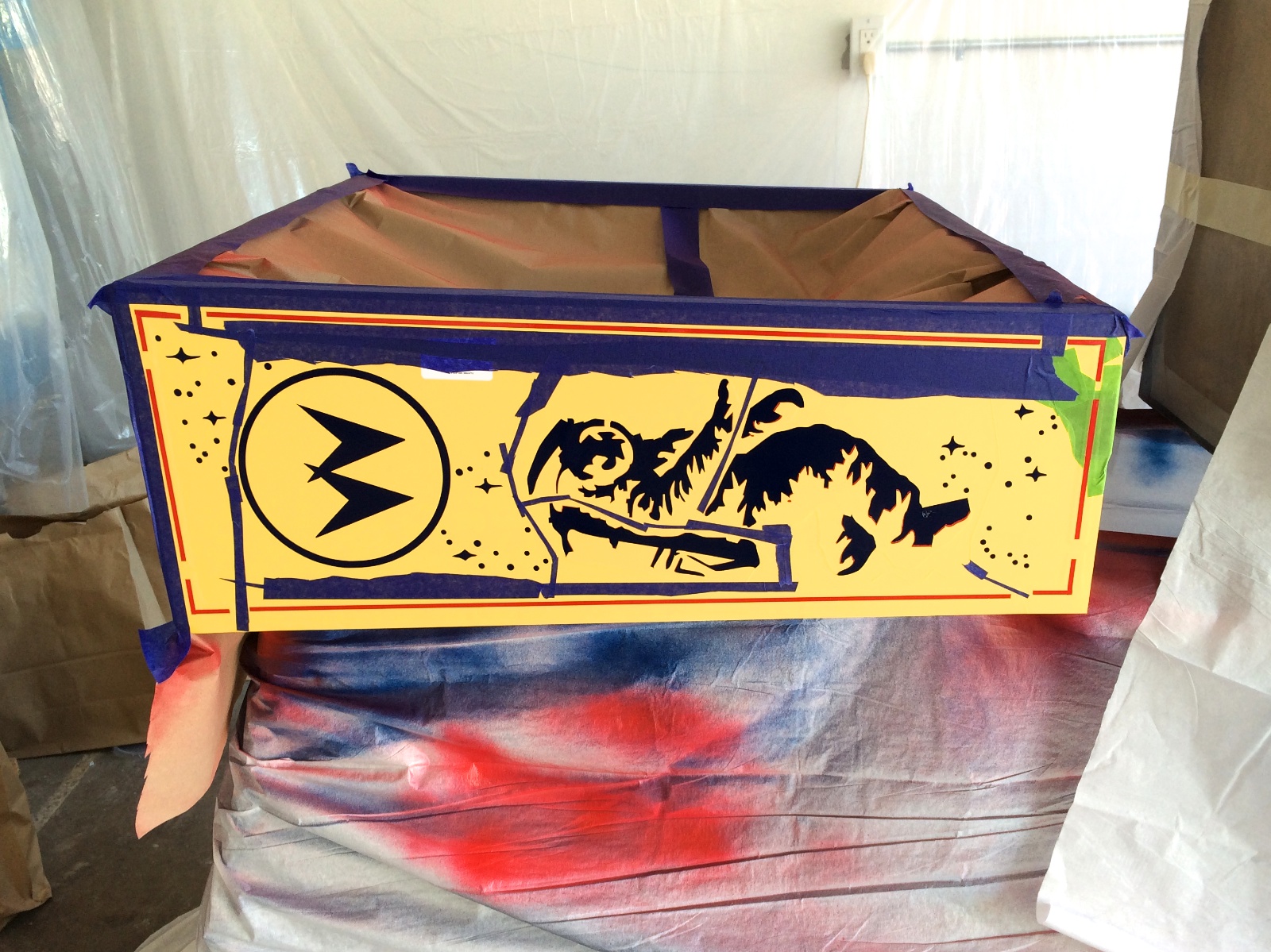
I started with the backbox. The stencils I bought came as one big piece, but alignment over the red color is critical and I figured it would be way too difficult to align it all at once, so I broke the problem down by cutting the white stencil into smaller pieces. The stencils are super sticky, and once they’re on… they’re on. Cutting it into smaller pieces made it more labor intensive to mask everything off – the lines between the pieces needed thin tape strips to be sure no white paint bled between them – but it was definitely way easier to get the alignment right and I’m glad I used this approach.

CabWhitePaintPart1-1

What you can’t see in the picture above is that the stars below the feet of the astronaut are indeed a separate piece, but no tape was needed at the seam due to the pieces overlapping. I also had to use some painter’s tape to form the line on the right side, since the stencil was designed for smaller backboxes.

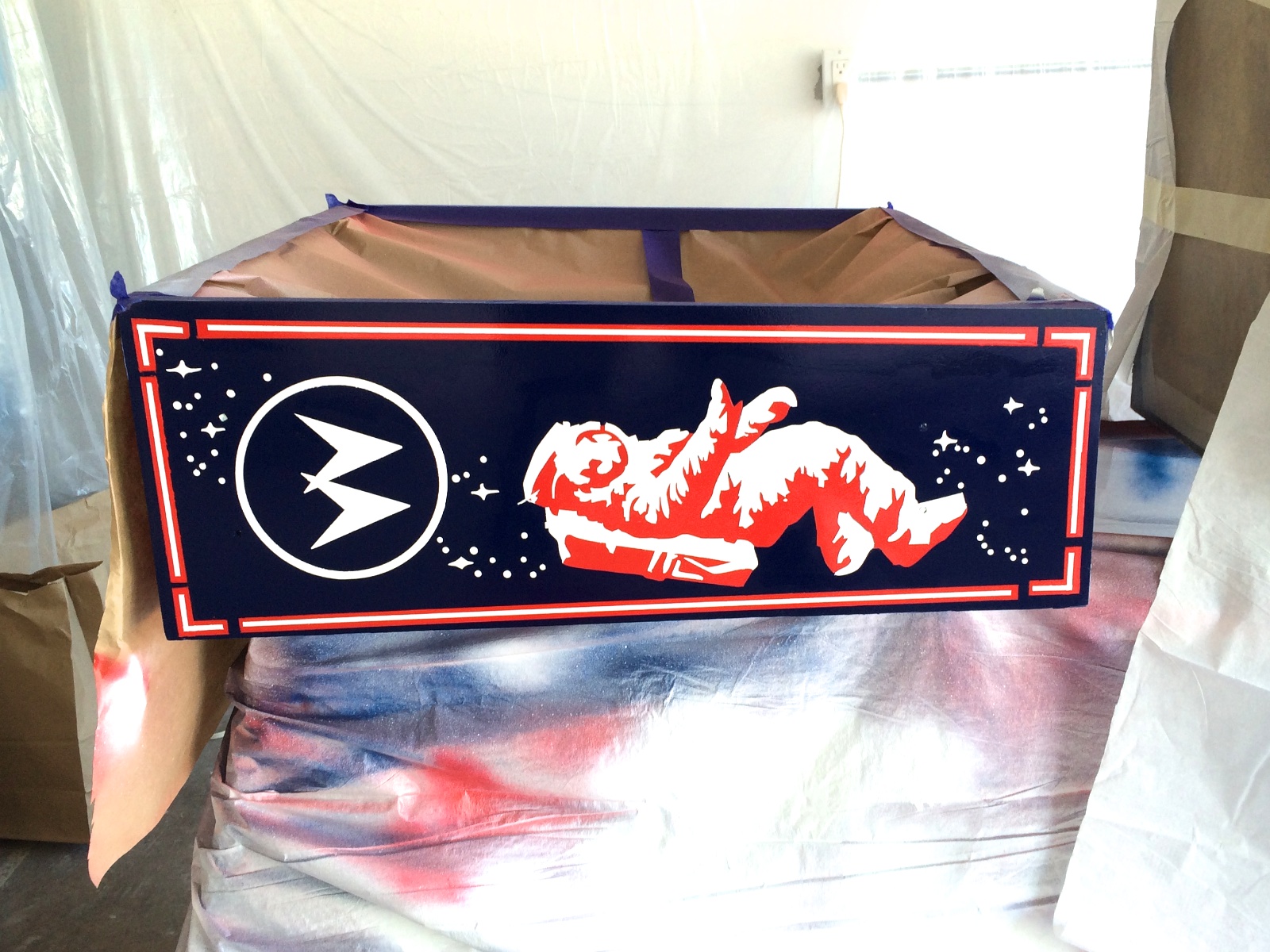
CabWhitePaintPart1-2

Here it is with the white paint applied and the masking pulled! Really happy with how the Williams logo and stars came out, and the now-two-color astronaut looks pretty good too. There’s some very small appearances of blue on the white/red edges that shouldn’t be there, but this should be fairly straightforward to patch up later.

I used the same approach on the opposite side of the backbox, slicing up the stencil in the same exact pattern – definitely took less time the second time around πŸ™‚

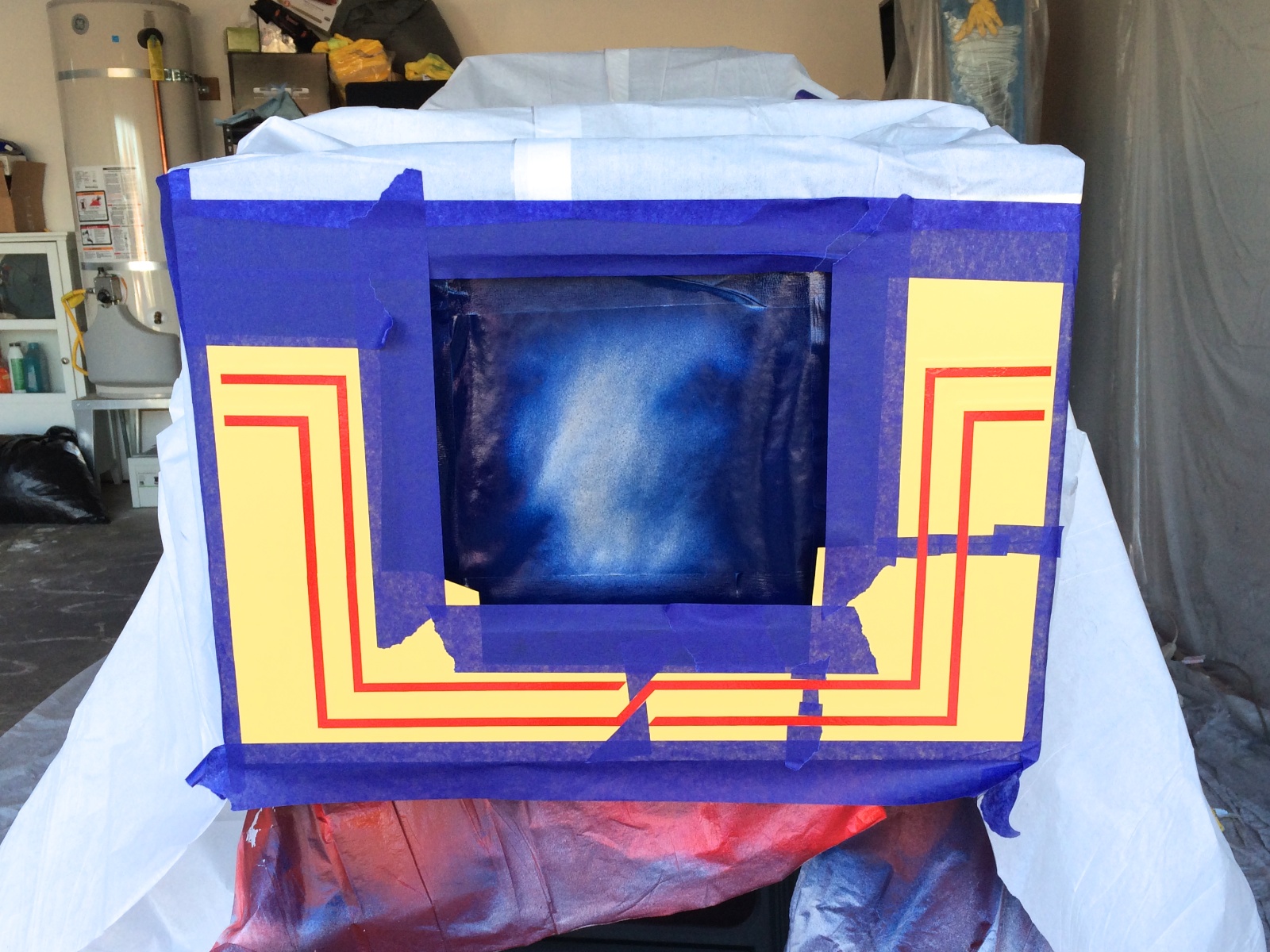
Finally, I had just enough time left in the afternoon to do the front of the cabinet. Again, I cut the stencil into smaller parts.

CabWhitePaintPart1-3

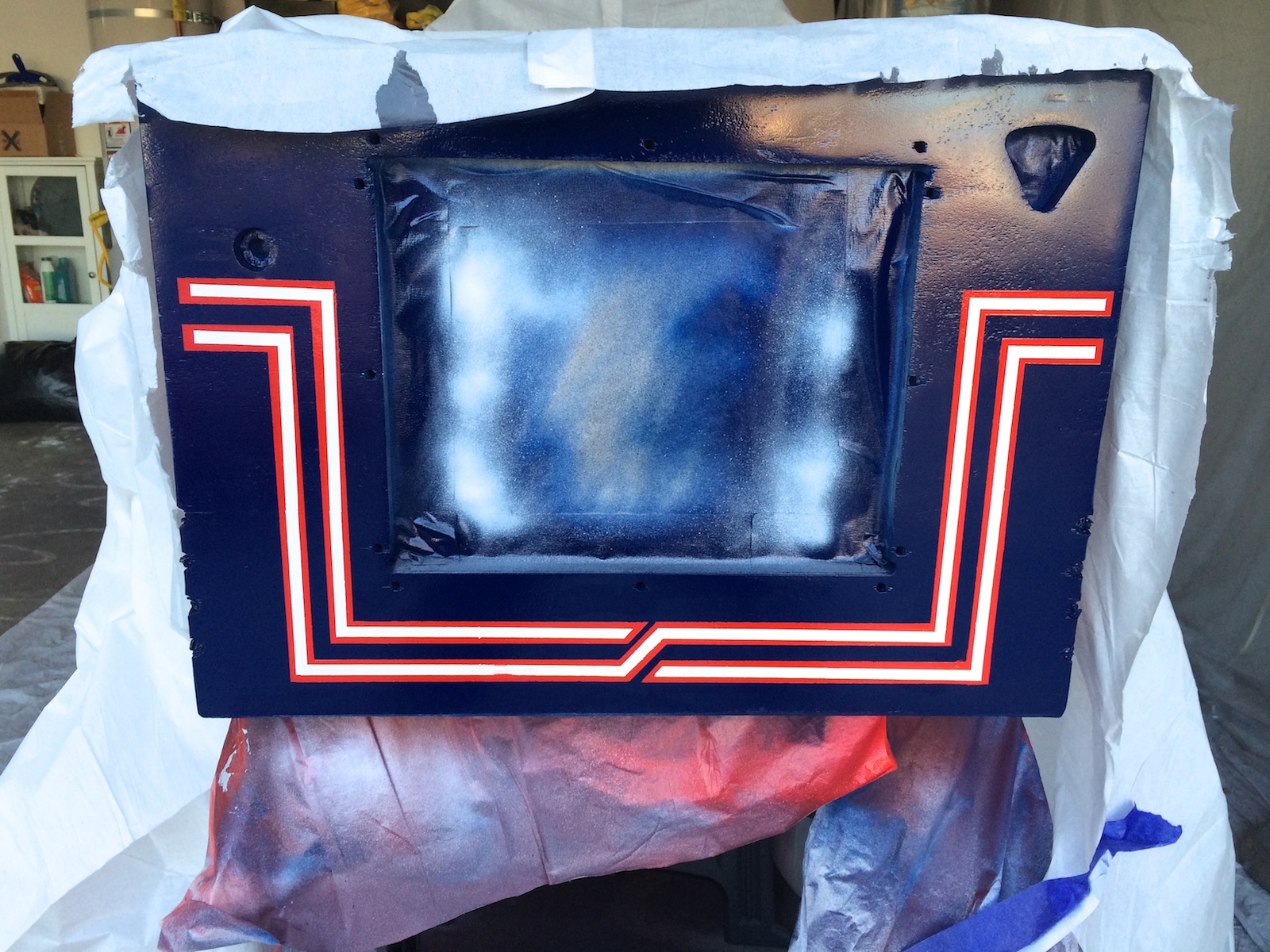
And here it is after the white paint:

CabWhitePaintPart1-4

It’s not easy to get the white stencil aligned to the red one – part of the problem is how opaque the stencil is, so it’s hard to see the red underneath. I got most of the pieces very well aligned here, except for the one at the top left. Notice that the vertical white lines on the left get very very close to the edge of the red ones. It doesn’t look great, so I erased them down to about the middle of the vertical section and will re-paint them next time alongside the rest of the cabinet!

Posted in Space Shuttle | Tagged , , , , , , | Leave a comment